
Dr. Ahmad Shahzad
Founder | Lyallpur Diabetes Foundation
Consultant Diabetologist | Educator | Advocate for Preventive Care
Seborrheic dermatitis is a typical skin disease that afflicts millions of individuals worldwide. It is mostly found on the scalp, face and other oily parts of the body, characterized by red, flaky and at times greasy patches. Seborrheic dermatitis is not contagious or life-threatening, but may be painful and chronic. Knowing its causes, symptoms and possible treatments is a key to controlling flare-ups and enhancing skin health.
What is Seborrheic Dermatitis?
Seborrheic dermatitis is a widespread, chronic inflammatory skin disorder that mainly targets regions with oil-producing (sebaceous) glands including the scalp, face (sides of the nose, eyebrows, ears and eyelids), and chest. It leaves flaky, scaly, greasy areas of skin that can be inflamed and itchy. It may present itself as dandruff on the head or as rash with yellow or white scales on other wet parts of the body. It is not contagious and may change according to the skin tone as it may appear reddish on a lighter skin or darker/lighter on a darker one. It usually erupts due to stress, fatigue, or the seasons.
Causes of Seborrheic Dermatitis
The etiology of seborrheic dermatitis is not quite clear, but it is thought to be caused by a complex of several factors:
- Malassezia yeast overgrowth: This is a normal yeast on the skin that exists in excess and causes an inflammatory response in vulnerable individuals. The yeast feeds on sebum (skin oil), which promotes its growth.
- Sebum production: The seborrheic dermatitis usually targets the areas that have a lot of oil glands where sebum is produced, which harbor the yeast growth.
- Inflammation: The immune system’s response to the yeast and other agents induces the typical redness, scaly, and irritation.
Several factors can trigger or worsen seborrheic dermatitis, including:
- Stress and fatigue
- Hormonal changes or illness
- Harsh hair or skin products (chemicals, detergents, soaps)
- Cold, dry weather or seasonal changes
- Certain medications such as psoralen, interferon, and lithium
- Genetic predisposition and family history of dermatitis or other skin conditions
- Medical conditions affecting immune function, such as HIV or neurological disorders like Parkinson’s disease
- Lifestyle factors like alcohol and tobacco use, obesity, and poor diet
It is neither due to bad hygiene nor allergies, and is not contagious. The exacerbations are frequently correlated with environmental and internal factors that influence the synthesis of skin oil, yeast, and immunity.
Symptoms and Affected Areas
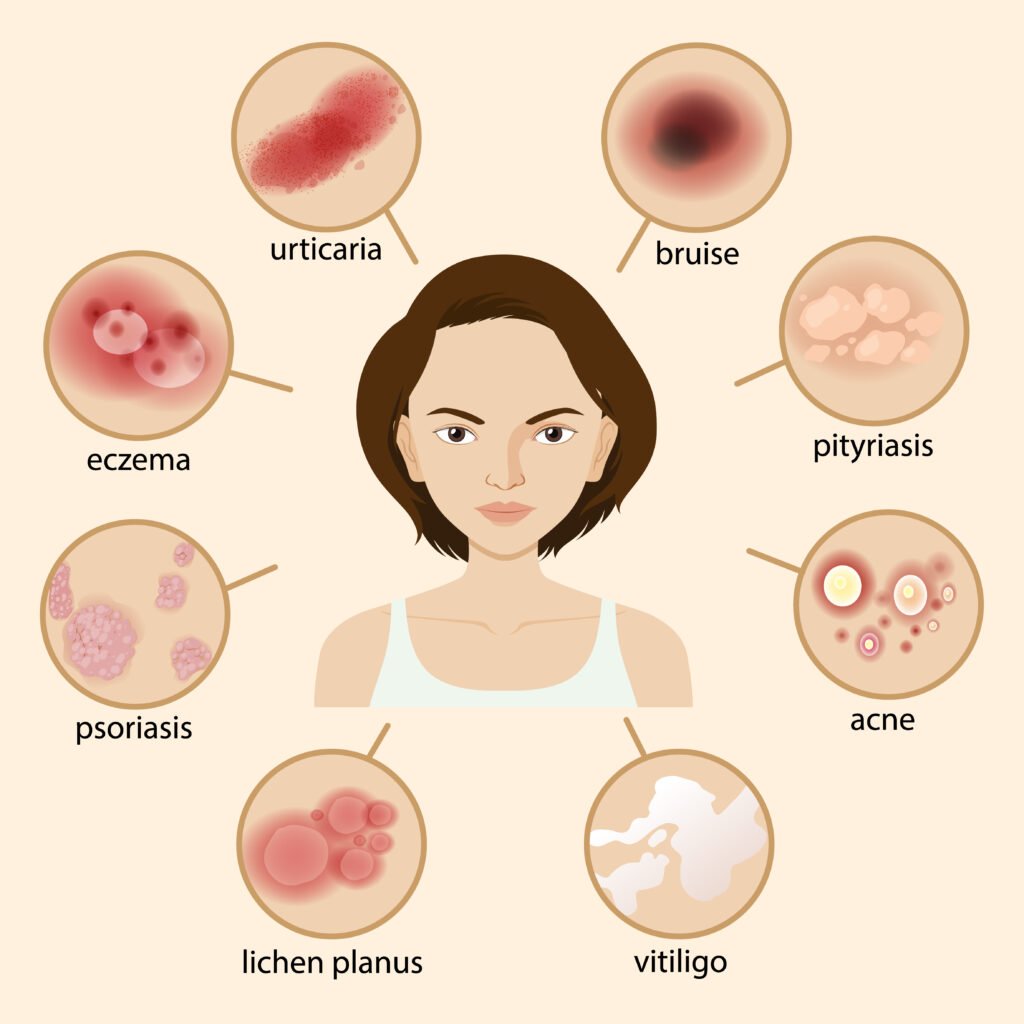
Seborrheic dermatitis symptoms and affected areas include:
- Symptoms:
- Flaking, greasy or oily scaly white or yellowish patches of skin.
- Redness or pallor of the skin (rednoser on light, light on dark).
- Itchiness that may be mild or severe.
- Raised skin and, in severe cases, crusts or thickened plaques.
- Scalp areas may experience temporary loss of hair.
- Eyelid involvement may result in blepharitis, scaly, swollen, and irritated eyelids.
- Oozing, cracks, flaking or crusting of ears, or around the ears.
- Maceration (skin breakdown) of skin folds with tenderness and burning, which may result in secondary infection.
Commonly affected areas:
- Scalp (also known as dandruff or cradle cap in babies).
- Face, particularly oily parts of nose, eyebrows, eyelids, around mouth and ears.
- Between the shoulders at the upper part of the chest.
- Hairy regions like beard, armpits, groin, under breasts.
- Moisture can also play a role in skin crevices.
It normally attacks regions that have a lot of sebaceous (oil) glands but excludes palm and soles. It can look different and be more severe based on skin color and personal factors. Symptoms tend to increase with stress, fatigue, or season change.
Diagnosis
Seborrheic dermatitis is mainly diagnosed just by the appearance and the location of the rash. A medical practitioner or dermatologist will generally:
- Record a history of symptoms and medical history.
- Inspect the affected skin areas with common features of flaky, greasy, red or yellowish scales on the oily parts of the skin, such as the scalp, face, ears, and chest.
- Invasive tests are usually not needed to diagnose the condition since the pattern of the rash is unique.
When the diagnosis is unclear or when seborrheic dermatitis has co-morbid conditions on the skin (such as psoriasis), further diagnostic measures can include:
- Skin biopsy: A small skin specimen is taken and tested under a microscope to verify the diagnosis and eliminate other diseases.
- Dermatoscopy: A magnified skin test can be used to exclude seborrheic dermatitis and other related skin infections of psoriasis or fungi.
- Laboratory tests can occasionally be ordered to exclude underlying conditions that can predispose or aggravate seborrheic dermatitis (e.g., HIV testing).
Overall, diagnosis relies heavily on clinical evaluation and sometimes biopsy, with few routine laboratory or imaging tests required.
You may also like to read: Gabapentin
Treatment Options
Treatment options for seborrheic dermatitis aim to control symptoms, reduce yeast overgrowth, and manage inflammation. Common approaches include:
- Medicated Shampoos: Antifungal shampoos that include ketoconazole, selenium sulfide, pyrithione zinc or coal tar are used to lower Malassezia yeast and manage scalp symptoms. These are normally applied every day initially and then cut down to maintenance.
- Topical Antifungals: Creams, gels, or foams containing ketoconazole, ciclopirox, clotrimazole, or terbinafine are used to treat skin affected by dermatitis to alleviate yeast and inflammation.
- Topical Corticosteroids: Low- to mid-potency steroid creams or lotions (e.g., hydrocortisone, desonide, fluocinolone) are able to swiftly decrease swelling and itching, particularly during a flare-up. The side effects may be long term making steroids usually short term or intermittent.
- Keratolytics: Salicylic acid or coal tar may be used to remove thick scale and enhance the efficacy of antifungal or steroid.
- Alternatives to steroids: Calcineurin inhibitors, including pimecrolimus or tacrolimus, can be used to control with fewer side effects.
- Oral Antifungal: When the infection is too rife or unresponsive to topical therapy, oral antifungal drugs like itraconazole or terbinafine can be administered and help reduce the amount of yeast in the body.
- Light Therapy: UVB phototherapy can be used in the case of extensive or resistant cases.
- General Skin Care: Cleansing in proper shampoos or cleansers and moisturizing can help to avoid the worsening of the condition.
Treatment is usually ongoing, focusing on controlling flares and maintaining symptoms. Full clearance may not always be possible, but symptom relief and improved quality of life are achievable with proper management.
Bottom Line
Seborrheic dermatitis could be a long-term disease, yet its symptoms could be managed with proper care. Many treatments are available to reduce flare-ups and maintain healthy skin: mediated shampoos, lifestyle changes. In case of persistence or exacerbation of the symptoms, a dermatologist will help to diagnose and manage them individually. It is possible to live comfortably with seborrheic dermatitis with regular care.
