
Dr. Ahmad Shahzad
Founder | Lyallpur Diabetes Foundation
Consultant Diabetologist | Educator | Advocate for Preventive Care
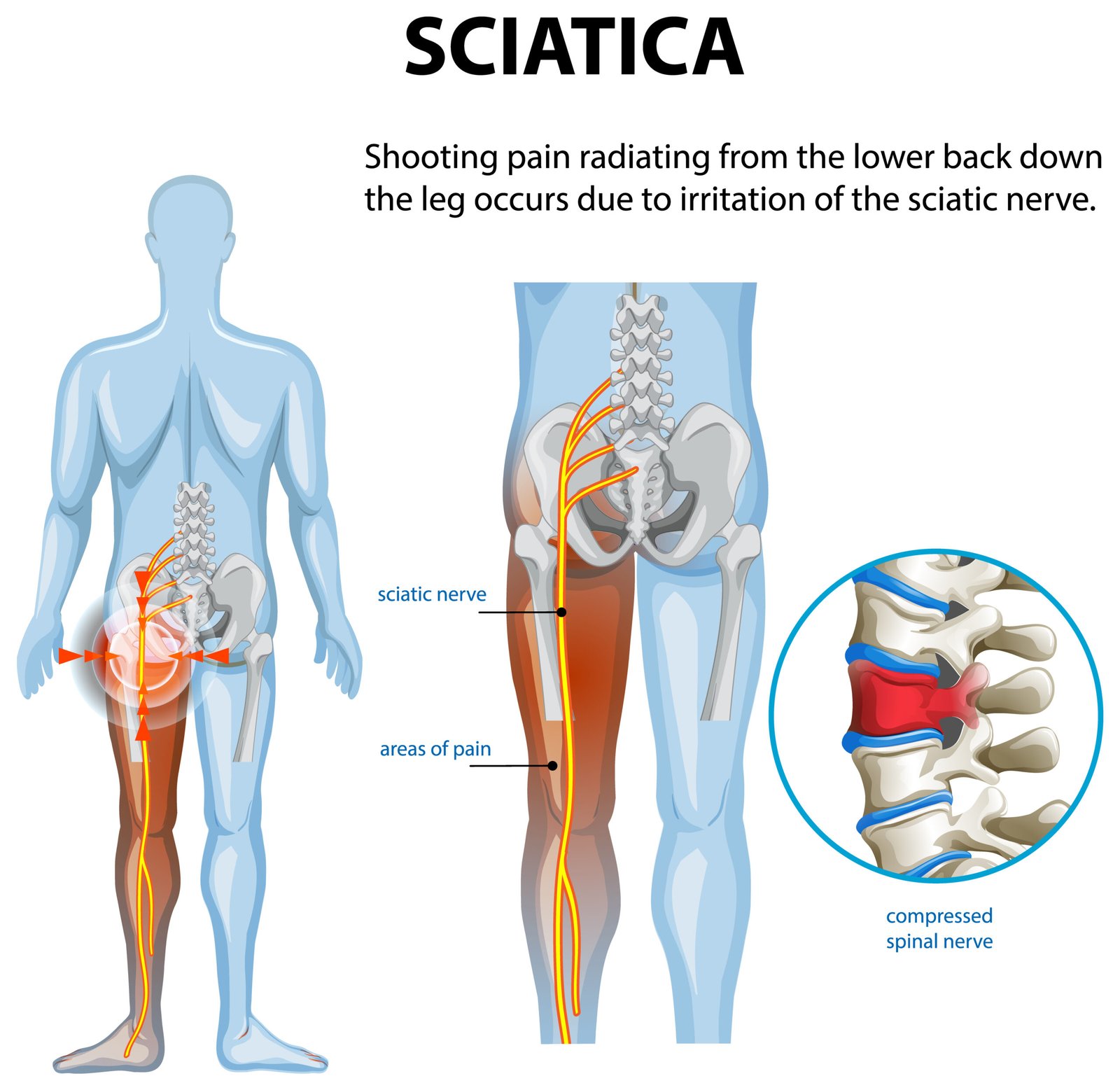
Sciatica’s a phrase you’ve probably come across if nagging back or leg discomfort sounds familiar. This kind of ache moves along the route of the sciatic nerve – starting at your lower spine, passing through the glute, and running down one limb. It might only stick around briefly; on the flip side, some folks deal with repeat episodes or long-lasting trouble. Here, we’re looking into what sparks it, signs to notice, ways doctors spot and manage it, and real-world tips that could keep those painful returns in check.
What Causes Sciatica?
Sciatica occurs when the sciatic nerve or the nerve roots that form it become compressed, irritated or inflamed.
Here are the main causes and risk factors:
Primary causes
- A slipped or swollen disc in the lower back pushes against nerves nearby.
- Spinal stenosis means the spine’s passage gets tighter, pressing on nerves traveling through it.
- Spondylolisthesis – that’s when one spinal bone moves ahead of the one below – pressing on nerves.
- Bone spurs – those bony lumps along the backbone – or any wear-and-tear shifts in the spinal area.
- Less frequent reasons include growths, injuries, or a piriformis issue – that’s when a butt muscle squishes the nerve.
Risk factors
- Most folks between 20 and 50 face a higher chance of slipped discs.
- Being too heavy puts more pressure on your backbone.
- Sitting too long, behind the wheel, or doing repeated lifts with turns at work.
- Diabetes – a condition that might lead to nerve problems.
Common Symptoms of Sciatica

When the sciatic nerve is affected, symptoms typically follow certain patterns:
- Pain shooting from your low back or butt, moving along the back side of a single leg.
- A stabbing, searing feeling down the limb – like lightning cutting through flesh.
- Numbness in the leg, sometimes a tingling feeling in the foot.
- Fumbling with toe raises or raising the foot – say, wobbly strength in the lower limb.
- Things might get worse if you’re coughing, or when you sneeze – especially while sitting too long, leaning forward, or turning your body.
When to seek urgent care:
If something feels off – like quick muscle drop, trouble holding pee or poop, or intense tingling near your butt or inner thighs (“saddle zone”) – it might point to a rare but dangerous issue such as cauda equina. Get seen by a doctor right away.
You may also like to read: Sleep and Diabetes
How Sciatica Is Diagnosed
Diagnosing sciatica involves a combination of clinical exam and sometimes imaging or nerve testing.
Assessment steps
- Medical background plus a check-up: The physician might go over when issues started, things that make it worse, how you stand, walk, muscle power in your legs or nerve responses.
- Particular body checks: Say, the straight-leg lift might show if a nerve’s acting up.
- Picture test – like an X-ray, MRI, or CT – could come up if they’re checking for a slipped disc, narrowed spine space, or similar physical issues.
- Nerve conduction tests or EMG – sometimes they show how bad a nerve injury is, or point to the specific nerve involved.
Effective Treatments for Sciatica
Most cases of sciatica respond well to conservative (non-surgical) treatments. Surgery is reserved for severe or persistent cases.
Non-surgical and first-line treatments
- Keep going – lying around too long can backfire; getting up keeps swelling down.
- Pain relievers you can buy without a prescription – like ibuprofen or naproxen – or drugs that calm tense muscles might help reduce discomfort.
- Cold packs right after injury – say, first two or three days – then switch it up with warmth to ease tightness and get blood moving better.
- Physical therapy involves stretching, along with building core strength, doing gentle cardio, or working on moves that ease nerve strain.
- Some folks feel better with chiropractic care – others try acupuncture or get a rubdown instead
When additional interventions may be needed
- Steroid shots – like epidural ones – to calm down irritated nerves.
- Surgery might help when bad leg pain sticks around, especially if strength keeps dropping or bones aren’t settling right after trying simpler treatments.
Outlook
In many cases, sciatica improves within a few weeks to months. Up to 80-90% of patients recover without surgery. Persistent or recurring symptoms may require ongoing management.
Home Remedies & Lifestyle Tips
You can do a lot to help your recovery and reduce the chances of future flare-ups.
Useful measures
- Gentle stretches or movement drills targeting the lower back, along with hamstrings, plus the butt muscles.
- Sit right by picking a chair that supports your lower back, while making sure your hips stay even with your knees.
- Ergonomic habits mean don’t stay seated or on your feet too long without shifting around once in a while.
- Keeping weight in check, along with daily gentle movement like walking or swimming, helps ease pressure on the spine.
- Bend your knees when you’re picking up something heavy – keep your spine upright while holding it near your body, yet don’t rotate sideways.
Preventing Sciatica Flare-Ups
Prevention is key because once you’ve had sciatica, you may be at higher risk of recurrence.
Prevention tips
- Strengthen core and back muscles regularly to support the spine.
- Maintain a healthy body weight.
- Stay active and avoid long periods of immobility.
- Use proper body mechanics at work and during exercise/lifting.
- Quit smoking (smoking impairs circulation and may slow healing).
When to See a Doctor
While many cases of sciatica improve with home care, you should seek medical attention if:
- Pain is intense or getting worse even after home treatment lasting a few weeks.
- You feel weak, also notice tingling, or completely lose feeling in your leg or foot.
- You’re suddenly unable to manage your bowels or pee – that could mean something serious is happening. A loss of feeling around the groin might go hand in hand with this warning sign.
- You’re losing weight for no clear reason, running a fever, or had cancer before – now your back hurts. These might point to something worse going on
Conclusion
Sciatica causes discomfort that follows the route of a major nerve in your leg. Knowing what sets it off, spotting warning signs fast, yet taking smart steps with care, plus daily adjustments, really helps healing move forward. By staying active while using hands-on help, personal routines, or long-term choices instead, many get back to normal without repeat episodes. When this pain hits, skip guessing – talk to someone trained so they can steer your plan and protect both your backbone plus nerves over time.
