
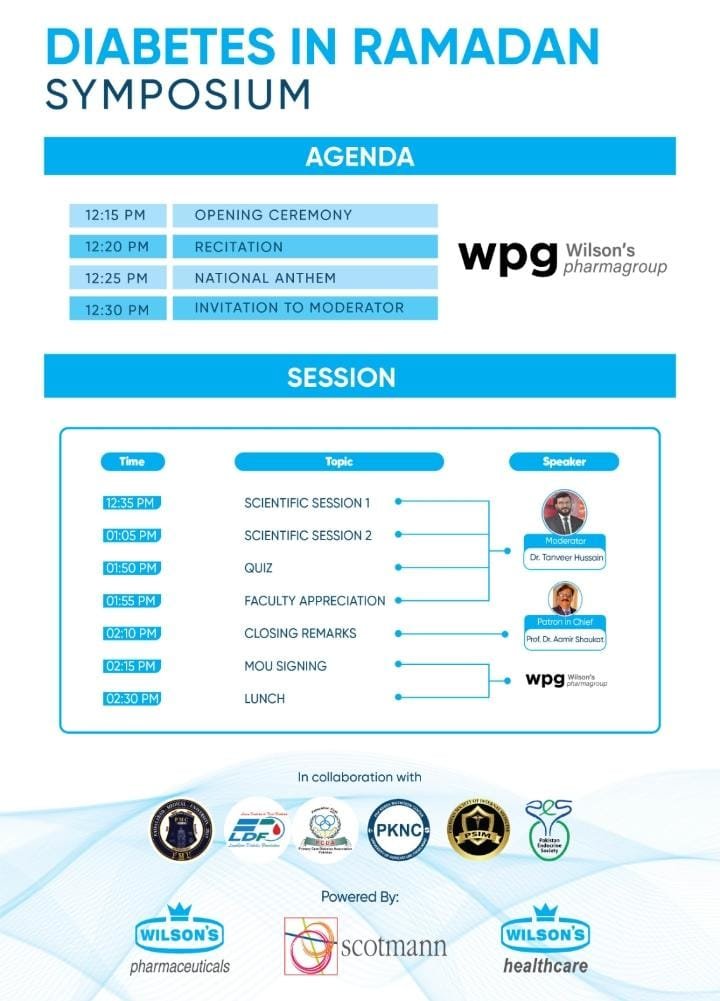
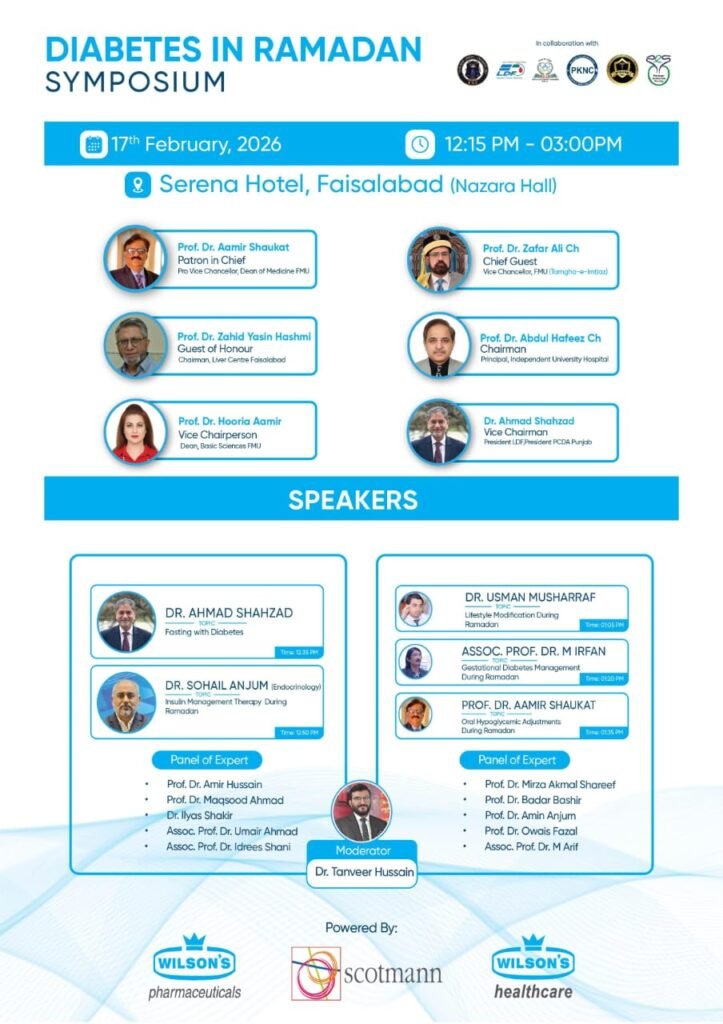
Presented by Lyallpur Diabetes Foundation in Collaboration with Faisalabad Medical University
Dr. Ahmad Shahzad
Founder | Lyallpur Diabetes Foundation
Consultant Diabetologist | Educator | Advocate for Preventive Care
Ramadan is a sacred and spiritually uplifting month for Muslims around the world. Fasting from dawn (Suhoor) to sunset (Iftar) is an important act of worship. However, for individuals living with diabetes, fasting can present significant health challenges if not properly planned.
This guide is designed for patients and families to understand how to fast safely with diabetes, who can fast, who should not fast, and what precautions must be taken before and during Ramadan.
Why Is Fasting Risky for People with Diabetes?
During Ramadan, long hours without food and drink can affect blood sugar levels. A person with diabetes may experience:
- Hypoglycemia (low blood sugar)
- Hyperglycemia (high blood sugar)
- Dehydration
- Diabetic ketoacidosis (especially in Type 1 diabetes)
- Blood clots due to dehydration
Because of these risks, fasting is not automatically safe for everyone with diabetes. Islam provides exemptions for people whose health may be harmed by fasting. Health and safety always come first.
The Importance of Pre-Ramadan Medical Evaluation (4–6 Months Before Ramadan)
One of the most important recommendations is that patients must consult their doctor 4 to 6 months before Ramadan.
Why so early?
Because doctors need time to:
- Review blood sugar control (HbA1c levels)
- Assess complications (kidney, heart, nerve, or eye disease)
- Adjust medications
- Modify insulin doses
- Educate patients on monitoring blood glucose during fasting
- Provide a personalized fasting plan
Early evaluation allows proper planning and reduces the risk of emergency complications during Ramadan.
Families should encourage their loved ones with diabetes to schedule this consultation well in advance.
Risk Stratification: Who Can Fast and Who Cannot?
Not all diabetic patients are the same. Doctors classify patients into low-risk, moderate-risk, and high-risk categories.
This risk assessment determines whether fasting is safe.
1. High-Risk Patients – SHOULD NOT FAST
High-risk patients are strongly advised not to fast because fasting may cause serious harm.
This group includes:
- Patients with Type 1 diabetes with poor control
- Patients with frequent hypoglycemia
- Patients who had severe hypoglycemia in the last 3 months
- Patients with diabetic ketoacidosis recently
- Pregnant women with diabetes
- Patients with advanced kidney disease
- Patients with serious heart disease
- Elderly patients with multiple health problems
- Patients who are unable to monitor blood glucose regularly
For these individuals, fasting can be life-threatening. Islam permits them not to fast and instead offer alternative religious options such as fidya (feeding the poor).
Families must understand that choosing not to fast for medical reasons is not a lack of faith — it is a protection of life.
2. Moderate-Risk Patients – May Fast With Strict Guidelines
Moderate-risk patients can fast, but only with medical supervision and clear precautions.
This group may include:
- Type 2 diabetes patients with moderate control
- Patients on insulin with stable blood sugar
- Patients taking multiple oral medications
- Patients with mild complications
These individuals must follow strict guidelines:
A. Medical Consultation Is Mandatory
Medication and insulin doses often need adjustment. For example:
- Long-acting insulin doses may need reduction
- Timing of oral medications may change
- Sulfonylureas may require caution due to hypoglycemia risk
Never change medication doses without consulting a doctor.
B. Regular Blood Glucose Monitoring
Many people think checking blood sugar breaks the fast. It does not.
Patients should check:
- Before Suhoor
- Midday
- Before Iftar
- Whenever symptoms occur
If blood sugar falls below 70 mg/dL (3.9 mmol/L), the fast must be broken immediately.
If blood sugar rises above 300 mg/dL (16.7 mmol/L), the fast should also be broken.
C. Nutrition Guidelines
At Suhoor:
- Eat complex carbohydrates (whole grains, oats)
- Include protein (eggs, yogurt, lentils)
- Avoid sugary foods
- Drink adequate water
At Iftar:
- Break fast gently (1–2 dates maximum if blood sugar allows)
- Avoid fried foods
- Avoid large sugary desserts
- Eat balanced meals
- Do not overeat
Overeating at Iftar can cause dangerous blood sugar spikes.
D. Hydration Is Essential
Dehydration increases the risk of blood clots and kidney problems. Patients should drink sufficient fluids between Iftar and Suhoor.
Avoid:
- Excessive caffeine
- Sugary drinks
E. Physical Activity
Light to moderate activity is acceptable. However:
- Avoid heavy exercise during fasting hours
- Taraweeh prayer counts as moderate physical activity
3. Low-Risk Patients – Can Fast Safely
Low-risk patients are generally:
- Well-controlled Type 2 diabetes patients
- Patients on diet control only
- Patients on metformin alone
- Patients without complications
These individuals can usually fast without major problems, but they should still:
- Consult a doctor before Ramadan
- Monitor blood glucose regularly
- Follow healthy dietary practices
- Stay hydrated
Even low-risk patients should not assume fasting is automatically safe every year. Health status can change.
Warning Signs: When to Break the Fast Immediately
Every diabetic patient must know the danger signs.
Break the fast if you experience:
- Sweating
- Dizziness
- Shaking
- Confusion
- Severe weakness
- Blurred vision
- Fainting
- Severe headache
- Chest pain
- Extreme thirst
Breaking the fast for health reasons is allowed and necessary.
Special Considerations for Insulin Users
Patients using insulin must be particularly cautious.
Doctors may:
- Reduce basal insulin dose
- Adjust timing to Iftar
- Modify rapid-acting insulin at meals
Skipping insulin to avoid hypoglycemia is dangerous and can lead to diabetic ketoacidosis.
Close monitoring is essential.
The Role of Family Support
Family members play a crucial role during Ramadan.
They should:
- Encourage medical consultation months before Ramadan
- Help prepare healthy Suhoor and Iftar meals
- Remind patients to check blood sugar
- Recognize warning signs of low or high blood sugar
- Support the decision if fasting is medically discouraged
Ramadan is a time of unity and compassion. Protecting a loved one’s health is part of that compassion.
Preparing Early: A Ramadan Action Plan
Here is a simple timeline for patients:
4–6 Months Before Ramadan
- Schedule doctor appointment
- Perform blood tests (HbA1c, kidney function)
- Review medications
- Create fasting plan
1 Month Before Ramadan
- Practice modified meal timings
- Monitor blood sugar more frequently
- Adjust lifestyle gradually
During Ramadan
- Follow medical advice strictly
- Monitor blood glucose daily
- Break fast if needed
Final Message: Faith and Health Go Together
Ramadan is a month of spiritual renewal, discipline, and mercy. For individuals with diabetes, it must also be a month of medical awareness and preparation.
- High-risk patients should not fast.
- Moderate-risk patients may fast with strict supervision.
- Low-risk patients can fast with routine precautions.
- All patients must consult their doctor 4–6 months before Ramadan.
Protecting health is a responsibility. Fasting should strengthen faith — not endanger life.
Through education, early planning, and community collaboration, we can ensure a safer and healthier Ramadan for everyone.
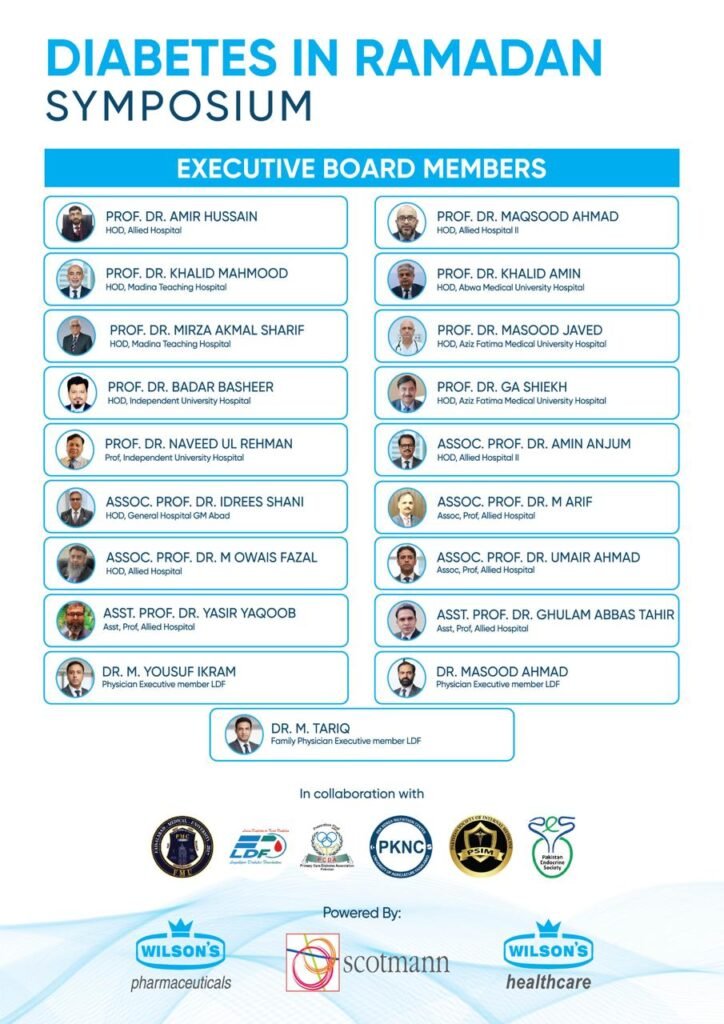
For more information, attend our upcoming seminar and stay connected with Lyallpur Diabetes Foundation for updated local guidelines and patient support initiatives.
Your health is a trust. Safeguard it wisely.
