
Dr. Ahmad Shahzad
Founder | Lyallpur Diabetes Foundation
Consultant Diabetologist | Educator | Advocate for Preventive Care
Most folks link diabetes with just two kinds – Type 1 or Type 2. Yet there’s another version hiding in plain sight known as lada, which stands for latent autoimmune diabetes in adults. It mixes traits from both main forms, so doctors might mistake it at first glance. Spotting lada sooner rather than later changes how treatment unfolds, along with future health results.
What Is LADA Diabetes?
LADA diabetes means latent autoimmune disease affecting adults. This condition slowly damages the pancreas cells that make insulin, just like Type 1 – but shows up later in life while moving at a gentler pace, kind of how Type 2 acts. Some doctors call it “Type 1.5” since it shares traits from both types.
Key features of lada diabetes:
- Folks usually start seeing signs in their 30s to 50s – unlike regular Type 1, which kicks in during kid years.
- Pancreatic islet cells attacked by immune antibodies like GAD or IA-2.
- At first, it might skip insulin treatment right away – yet usually shifts to needing insulin more quickly compared to regular Type 2.
Key Characteristics of LADA Diabetes
Some key signs of lada diabetes include:
- Body’s defense turns on itself – pancreas cells get hit, so less insulin comes out bit by bit. One thing leads to another: damage piles up, output drops slowly but surely.
- Adults get it instead of kids, yet ages can differ quite a bit.
- Unlike typical Type 1, which hits fast, lada creeps in slowly – taking its time before showing clear signs.
- Mix of low insulin along with maybe cells not responding well: A few signs look like Type 2 diabetes – where the body resists insulin – but the main thing here is the pancreas stops making insulin.
- Misdiagnosis danger: Since it starts later in life and moves slowly, lots of people with lada get mistaken for having Type 2 diabetes at first.
Causes and Risk Factors
The precise reason behind lada diabetes remains unclear, yet it’s tied to autoimmune issues along with hereditary ones, while outside factors also play a role.
- Some people inherit genes linked to LADA that show up in both type 1 and type 2 diabetes. Take immune attack signs – those can appear here too, along with certain genes tied to how the body handles insulin.
- Autoimmunity shows up when markers like GAD or IA-2 pop into blood tests – hinting hard at LADA. When these proteins appear, it means the body’s defenses are mistakenly going after insulin-producing cells.
- Sure, here’s a rewritten version matching your request: Body weight and daily habits can play a role – even if it’s not as obvious as with Type 2 diabetes. Being overweight or hardly moving around might boost chances or speed things up.
Though you can’t totally stop type 1 diabetes – since it’s tied to immune system issues – knowing what raises your chances or signals trouble at first may lead to quicker detection along with more effective handling.
Symptoms of LADA Diabetes
The symptoms of lada diabetes are similar to other forms of diabetes, though their onset may be slower and less dramatic than classic Type 1.
Common symptoms include:
- Increased thirst (polydipsia)
- Frequent urination (polyuria)
- Unexplained weight loss (even though appetite may remain normal or increase)
- Fatigue, weakness
- Blurred vision
- Dry or itchy skin
- Tingling or numbness in hands/feet (if neuropathy begins)
Important red-flags that may suggest lada rather than standard Type 2:
- Adult diagnosed with diabetes but has lower BMI (not typical overweight/obese for Type 2)
- Initial response to diet/oral meds is weaker than expected
- Rapid decline in insulin production over time
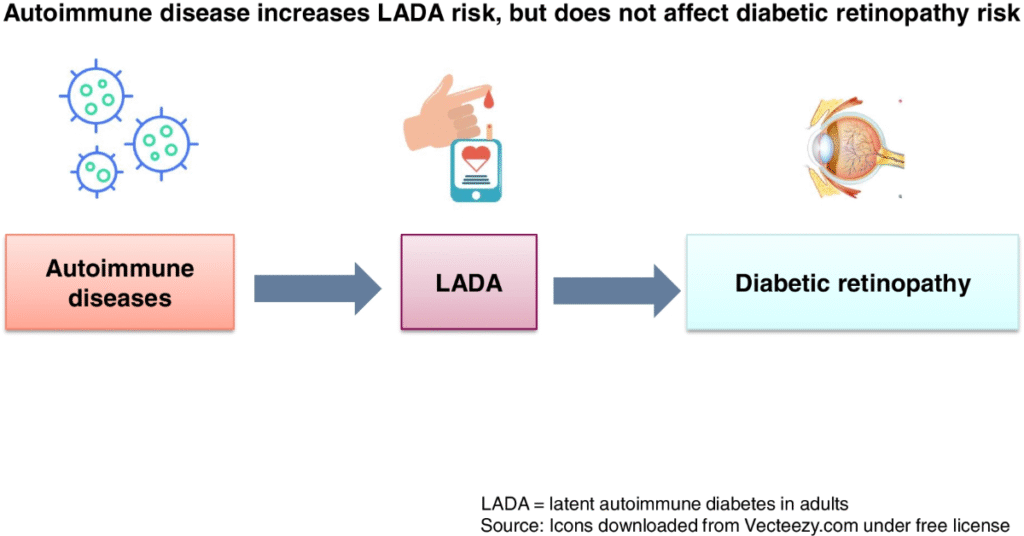
- Presence of autoimmune disease history (thyroid, etc)
How Is LADA Diabetes Diagnosed?
Diagnosing lada diabetes requires more than just a standard diabetes diagnosis; it involves distinguishing it from Type 2 and Type 1 in adults.
Key diagnostic tools / criteria:
- Testing for self-reactive antibodies – like those targeting GAD, or IA-2, along with ones against insulin – can point to an immune system attack on beta cells, which is common in LADA.
- C-peptide check: it gives a clue about how much insulin your body’s still making on its own. With LADA, this level usually drops quickly compared to regular Type 2.
- Clinical hints: Shows up in adulthood, doesn’t require insulin right away – yet has signs that don’t fit typical Type 2, like being thin or having immune system attacks.
Since no standard line clearly marks when lada starts, doctors usually piece things together using several clues. Without checking antibodies, it’s easy to mistake it for type 2 instead.
LADA Diabetes vs. Type 1 vs. Type 2 – A Comparison
| Feature | Type 1 Diabetes | LADA Diabetes | Type 2 Diabetes |
| Onset age | Usually children/adolescents | Adults (30-50+) | Adults, often older, overweight |
| Autoantibodies | Often yes | Yes (in many cases) | Usually no |
| Insulin production | Rapid loss | Gradual loss | Variable; often insulin resistance first |
| Need for insulin initially | Usually immediate | Often delayed but eventual | Often later or maybe oral meds first |
| Typical body type | Lean | Often lean/moderate | Often overweight or obese |
You may also like to read: Impact of Diabetes on Productivity and Work Life
Treatment and Management Options
The main aim when handling lada diabetes? Keep blood sugar steady, hold on to whatever beta cell activity is left, and lower the chances of problems down the line. Since this type involves immune system attacks and a slow drop in insulin production, the approach isn’t quite the same as regular Type 2.
Early Phase
- Lifestyle changes mean eating better foods – also moving your body often; keeping weight in check if it matters for you
- Potential use of pills for blood sugar control – if the body’s own insulin output remains strong enough
- Avoid leaning too much on drugs that force beta cells – like sulfonylureas – since doing so might speed up their breakdown in LADA.
Progression and Insulin Therapy
- Most folks diagnosed with LADA eventually need insulin, often earlier compared to those with regular Type 2 diabetes.
- Research hints early use of insulin might keep beta cells working better for more time – this happens because it eases pressure on the ones still active.
- Treatment should fit the person, depending on how much insulin their body still makes – shown by C-peptide – along with blood sugar numbers, daily routines, and overall health.
Monitoring & Support
Keep checking blood sugar now and then – also HbA1c, plus C-peptide when needed – or autoantibodies if there’s a reason
- Checking for problems tied to diabetes – like eye issues, nerve damage, or kidney trouble – is needed no matter what kind you have
- Patient learning means understanding your condition, how it might change over time – so you can see what habits really affect it – as well as handling insulin day to day
- Coping with feelings: getting used to needing insulin, handling the change from pills alone to shots instead
Potential Complications
As with any form of diabetes, inadequate control of blood sugar or mismanagement of lada diabetes can lead to complications, many of which overlap with those of Type 1 and Type 2. These include:
- Cardiovascular disease (heart attack, stroke)
- Kidney disease (nephropathy)
- Eye problems (retinopathy)
- Nerve damage (neuropathy)
- Foot problems
Because lada can progress more quickly to insulin deficiency, overlooked or misclassified cases may lead to suboptimal therapy and thus greater risk of complications.
Conclusion
LADA diabetes is a tricky type that’s easy to miss, falling somewhere between Type 1 and Type 2. Since it shows up in grown-ups and worsens slowly, doctors sometimes mistake it for Type 2 instead. But because it involves the immune system attacking insulin cells – and leads to needing insulin shots later – spotting it early helps guide better choices in care. When someone develops diabetes as an adult but doesn’t follow the usual path or react like most patients, bringing up LADA with a doctor could be useful. Getting it right from the start, along with proper steps to manage it, really impacts how well things go over time.