

🩺 Dr. Ahmad Shahzad
Founder | Lyallpur Diabetes Foundation
Consultant Diabetologist | Educator | Advocate for Preventive Care
Bronze diabetes is a medical condition that reports the combination of abnormal skin pigmentation and diabetes mellitus, most noticeably a grayish or bronze tone. This condition commonly arises from excess iron accumulation in the body; a disorder known as hemochromatosis. In exceptional cases, copper overload may also play a role in its development. This condition only influences internal organs like pancreas and liver but also presents apparent changes on the skin- specifically on the face. Early awareness is important, as untreated cases can lead to serious health complications. In this article, we’ll check out the definition of bronze diabetes, its underlying causes, the visible signs on face, and how excess copper may contribute to this rare but crucial condition.
Definition and History
A certain kind of secondary diabetes mellitus known as “bronze diabetes” is brought on by extreme iron (and infrequently copper) overload, which primarily damages the pancreas and inhibits its ability to produce insulin. In the past, it was observed in people with untreated hereditary hemochromatosis, a condition in which organ deposition results from excessive iron absorption.
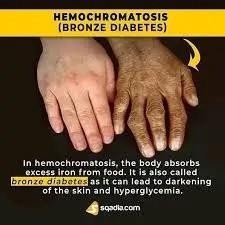
Increased melanin production and iron deposition in the skin, a result of underlying metabolic damage from iron accumulation in organs like liver and pancreas, give the skin its distinctive “bronze” look, which is characterized by a slate-grey or metallic-bronze pigmentation.
Despite being less frequently used in conventional medical terminology in favor of terms like “diabetes secondary to hemochromatosis,” the phrase “bronze diabetes” is nevertheless a useful diagnostic and historical notion that emphasizes the connection between metal overload disorders and endocrine dysfunction.
Cause: Iron Overload and Metabolic Damage
Systemic iron excess, most frequently caused by hereditary hemochromatosis (HH), is its primary cause. This genetic condition affects the control of dietary iron absorption and is often caused by mutations in the HFE gene, particularly C282Y homozygosity. As a result, too much iron builds up over the years in critical organs such as pancreas, liver, heart, skin and joints.
This iron overload causes metabolic damage through several mechanisms:
Pancreatic Damage
Insulin synthesis and secretion are hampered by iron deposition, which directly harms pancreatic beta-cells. Moreover, iron causes liver damage and insulin resistance, which further impair glucose metabolism and ultimately end in diabetes mellitus.
Skin Hyperpigmentation (Bronze Appearance)
Increased melanin synthesis is triggered by excess iron deposits in the skin (as hemosiderin). The unusual
metabolic-bronze or slate-grey skin discoloration is caused by the interaction of hemosiderin and melanin.
Organ Toxicity
In all afflicted organs (cirrhosis, fibrosis, arthropathy, and cardiomyopathy, iron catalyzes the production of reactive oxygen species (free radicals), which results in oxidative stress that damages cellular structures and interferes with normal function.
While HH is the classic cause, it can also arise from secondary iron overload, such as:
- Chronic Liver Disease: Particularly chronic hepatitis C or alcoholic liver disease, which might interfere with iron metabolism.
- Repeated Blood Transfusion: Prevalent in long-term anemias (such as thalassemia and sickle cell disease).
Bronze Diabetes Face: Why the Skin Turns Bronze
The emergence of bronze, brown, or gray pigmentation, specifically on sun-exposed parts like the cheeks and forehead, is one of the most visible symptoms. Iron, particularly hemosiderin, accumulates in the dermis and sweat glands in hereditary hemochromatosis, where it interacts with melanin to exacerbate discoloration. The end effect is a slate-gray or metallic tone that frequently intensifies into a brownish bronze color.
The facial skin may have mild texture changes, such as dryness, thinning, and even scaling, in addition to pigmentation. Because iron deposition damages follicular health, patients may experience hair loss in certain situations, most notably thinning of eyebrows and eyelashes. Facial hyperpigmentation is a potentially early clinical sign since these skin changes on the face might appear years before more over systemic warning symptoms of hemochromatosis, like liver malfunction, diabetes, or joint pain.

Why Does Copper Excess Cause Bronze Diabetes?
The dual nature of copper- it is essential for enzymes and metabolisms, but too much of it can induce oxidative stress and tissue damage- is the basis for the theory that copper overload causes bronze diabetes. Copper builds up in the liver and blood in conditions like Wilson’s disease due to defective copper transport (ATP7B gene mutations), where it takes part in Fenton-Haber-Weiss reactions that produce reactive oxygen species (ROS) that damage cells and organs.
This oxidative stress influences metabolic tissues like the pancreas in addition to the liver and brain. ROS can harm beta cells that produce insulin and disrupt metabolic enzymes, which may lead to glucose intolerance or diabetes. Copper can also alter glucose-handling pathways; according to some research, it impairs mitochondrial and glycolytic enzyme performance, exacerbating metabolic imbalance.
Although iron excess has historically been linked to it, there is rising attention in how combined metal overload (copper + iron) may hasten both diabetes and pigmentation. Another copper-dependent enzyme involved in iron
metabolism is ceruloplasmin; if it malfunctions, iron homeostasis may also be upset, which could have an increased impact on the system.
The connection between bronze diabetes and copper excess is still hypothetical, though. Wilson’s disease illustrates the negative impact of copper accumulation, however there is little hard proof that copper causes the typical trifecta of liver, diabetes, disease, and bronze skin. To ascertain whether copper directly contributes to the development of what is known as bronze diabetes, further focused studies are required.
You may also like to read: Community Diabetes Care Programs
Diagnosis and Treatment Options
Blood tests for serum ferritin and transferring saturation are used as diagnosis; enhanced ferritin and transferring saturation above 45% are strongly suggestive of iron excess. Family screening is guided by genetic testing for HFE gene variants, such as C282Y, which confirms hereditary hemochromatosis. Liver and pancreatic MRI scans provide a non-invasive method of measuring iron buildup and tracking the effectiveness of treatment.
The goal of treatment is to lower iron reserves; phlebotomy, which involves drawing 450-500 ml of blood every week or every two weeks, efficiently eliminating iron until ferritin levels are approx. 50 µg/L, after which there is periodic maintenance. Deferasirox and other iron chelators provide an alternative for people who are unable to have transfusions. Before laboratory testing reveals excess iron, its spontaneous case frequently starts with facial discoloration and exhaustion. Skin pigmentation gradually lightens with regular treatment, albeit it can take months for this to happen.
Frequently Asked Questions
Is diabetic bronze curable?
The development of diabetes can be reversed with treats in some cases. Otherwise, there are cases where pancreas may be damaged permanently thus necessitating the use of diabetes medication to regulate the levels of glucose present in the blood.
What are 3 triads of diabetes?
The three P diabetes is polydipsia, polyuria and polyphagia. These terms are related to thirst increase, increase in the urination, and the rise of the appetite. The three Ps usually go hand in hand; this is not always true.