

Dr. Ahmad Shahzad
Founder | Lyallpur Diabetes Foundation
Consultant Diabetologist | Educator | Advocate for Preventive Care
Living with diabetes involves more than just keeping blood sugar levels in check—it also means staying alert to the complications that can quietly develop over time. One of the most common and sight-threatening of these is diabetic retinopathy, a condition that damages the delicate blood vessels in the retina. Usually developing without any advanced notice, it can cause quite severe sight issues unless dealt with in due time. This article will discuss the causative factors of diabetic retinopathy and the quality it can cause to eye health, and why early awareness and management are critical in protecting their sight.
What is Diabetic Retinopathy?
Diabetic retinopathy is a diabetic condition that affects the eye by damaging the blood vessels in the retina or the light sensitive tissue found at the back of the eye that converts light into images. The condition makes the retinal blood vessels swell, leak, or bleed to cause vision changes, blurry vision, or blindness without treatment. It normally impacts both eyes, and is the most frequent cause of vision loss in people with diabetes, and the most prevalent cause of blindness in adults.
Causes
Diabetic retinopathy is chiefly caused by the long-term effects of excessive sugar levels in the blood (hyperglycemia) whereby the small blood vessels supplying the retina, the light sensitive area on the inside at the back part of the eye, are damaged. This damage enlarges the blood vessels, drips fluid or blood, or blocks completely, resulting in poor blood circulation and oxygen deprivation in the retina.
There are two main types of diabetic retinopathy caused by these blood vessel changes:
- Nonproliferative diabetic retinopathy (NPDR), in which the thin walls of blood vessels have small bulges that in some cases leak blood or water causing swelling (macular edema) and destruction to the retina.
- Proliferative diabetic retinopathy (PDR), still more advanced when damaged vessels are occluded, which triggers the formation of new abnormal blood vessels (neovascularization) that may break, bleed, and lead to scar tissue. This may cause retinal detachment, vitreous bleed, glaucoma and irreparable blindness.
Additional factors that contribute to the risk and severity of diabetic retinopathy include:
- Poorly controlled blood sugar over time
- High blood pressure
- High cholesterol
- Smoking
- Pregnancy
- Ethnic factors (higher risk in Black, Latino, Native American populations)
- Longer duration of diabetes
The pathophysiology in this is the biochemical processes that lead to oxidative stress, inflammation, and vascular growth factor alterations leading to Leakage of the blood vessels in the retina and other blood vessels grow abnormally.
Stages of Diabetic Retinopathy
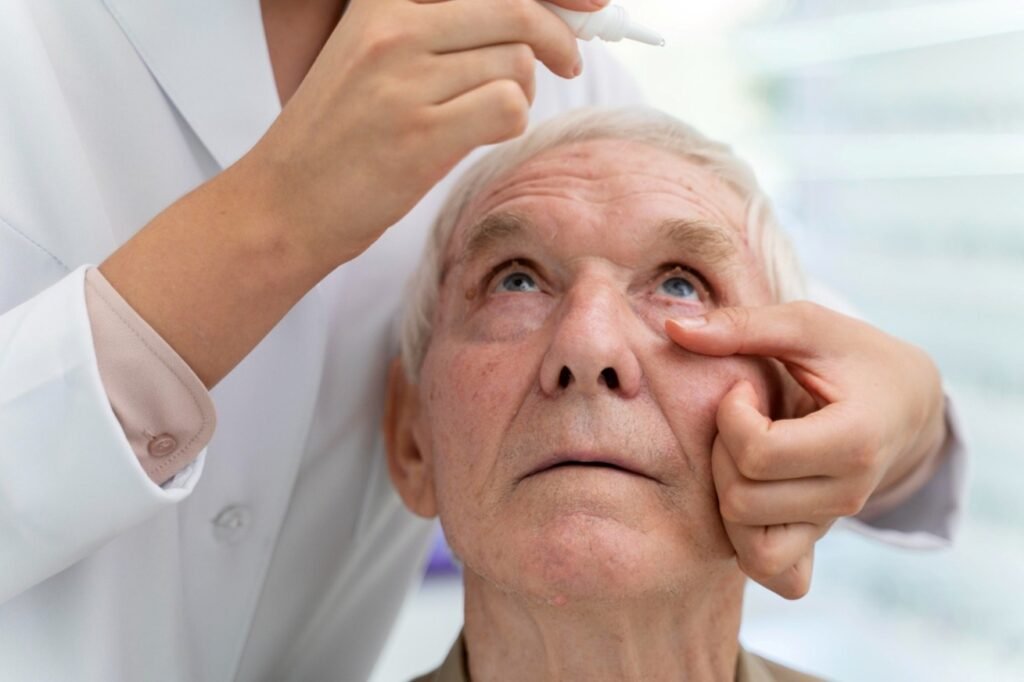
Diabetic retinopathy advances through a series of stages, which are mostly broadly divided into nonproliferative diabetic retinopathy (NPDR) and proliferative diabetic retinopathy (PDR). These levels show additional retinal blood vessel damage.
- Stage 1: Mild Nonproliferative Diabetic Retinopathy (Mild NPDR)
- Defined by microaneurysm, small blister-like growths in the vessels of the retina.
- This initial phase does not interfere with the vision but is the onset of diabetes damage in the retina.
- Stage 2: Moderate Nonproliferative Diabetic Retinopathy (Moderate NPDR)
- More blood vessels are destroyed, with blood and water leaking into the retina.
- The buildup of the fluid can lead to macular edema and blurred vision.
- Stage 3: Severe Nonproliferative Diabetic Retinopathy (Severe NPDR)
- Extensive blocking of blood vessels leads to serious retinal ischemia (incapacity).
- Signals the retina to begin growing new blood vessels, which will lead to the risk of severe vision problems.
- Stage 4: Proliferative Diabetic Retinopathy (PDR)
- The worst and further developed stage.
- New abnormal vessels develop (neovascularization) that are susceptible to bleeding.
These vessels form scar tissue, which may lead to retinal detachment and blindness or serious loss of vision.
Consequences of Diabetic Retinopathy
Diabetic retinopathy may have catastrophic sequels, mainly related to the loss of sight and blindness. The key complications arise because of damage to the retinal blood vessels due to diabetes.
Key Consequences
- Loss of Vision and Blindness: The eye has numerous blood vessels, which when damaged cause their leakage to produce blurred vision. Untreated, diabetic retinopathy can worsen to total loss of sight or blindness.
- Vitreous Hemorrhage: When the weak, damaged new blood vessel growth in proliferative retinopathy bleeds into the vitreous (a gel-like material inside the eye), people will have floaters or severe blurring. Though vision may recover when the blood is clear, repeated bleeding may cause permanent loss.
- Retinal Detachment: A defective network of blood vessels can grow and pull the retina off the back of the eye (tractional retinal detachment), resulting in poor vision or blindness unless it is treated early.
- Macular Edema: Liquid getting into the macula (the central part of the retina that gives clear and distinct vision) will result in the macula getting swollen (macular edema) and central vision becoming nonexistent or distorted. This may happen at any stage, and it is a usual cause of sight loss in diabetic eye disease.
- Glaucoma: Due to the formation of new blood vessels on the iris, liver flow of fluid that balances the eye pressure may be blocked, which in turn leads to glaucoma and severe damage to the optic nerve and the loss of sight.
All in all, diabetic retinopathy is the primary cause of blindness in the working-age population, so preventing this adverse event through early diagnosis, close monitoring, and proper diabetic control is essential.
Symptoms and Warning Signs
Diabetic retinopathy may not show any symptoms in its initial stages so it is hard to notice without an eye test. As the condition develops, there are various warning signs and symptoms such as:
- Blurred or distorted vision may pass, or become progressively worse.
- Eye floaters, which are spots, dark strings, or cobwebs that move in the vision field.
- Bad eyesight in poorly lighted areas.
- Trouble to remember color shades and change in their appearance.
- Blind spots in the field of vision.
- Narrowing side vision.
- Change in day-to-day vision regarding nearsightedness or farsightedness.
- Acute malfunction or blindness, usually a symptom of complications that must be urgently treated.
Diagnosis and Screening
Diagnosis and Screening of Diabetic Retinopathy
- Dilated Eye Exam: Widens pupils to check retina and optic nerve for damage.
- OCT (Optical Coherence Tomography): Scans retinal thickness and swelling.
- Fluorescein Angiography: Uses dye to detect leaking or blocked vessels.
- Visual Acuity Test: Measures clarity of vision.
- Fundus Photography: Captures retinal images to track changes.
- OCT Angiography (OCTA): New imaging method for detailed blood flow without dye.
Screening Recommendation:
- Annual eye exams for people with diabetes (more frequent if advanced).
- Early detection helps prevent vision loss.
You may also like to read: Diabetic Neuropathy
Treatment Options
The main treatment options for diabetic retinopathy include:
· Laser Therapy (Photocoagulation): It shrinks or blocks the blood vessels; it is particularly successful in proliferative diabetic retinopathy and macular edema.
· Anti-VEGF Injections: Drugs placed in eye to inhibit vascular endothelial growth factor that prevents abnormal blood vessel development and leakage of fluids.
· Steroid Implants: Retina inflammation and swelling are subdued with corticosteroid implants that offer slow-release properties.
· Vitrectomy Surgery: The surgical act of eliminating the blood/scar tissue found in the vitreous gel in severe cases involving hemorrhage and retinal detachment.
· Diabetes and Risk Factors Management: Management of diabetes and associated risk factors is imperative in slowing progression and enhancing the outcomes of treatment.
Final Thoughts
Diabetic retinopathy is a dangerous side effect that may have hampered sight in analogy if not treated early. By learning its causes and effects, regular eye exams, controlling blood sugar and overall health management, a person can significantly reduce the possibility of losing his/her eyesight. The best methods of saving vision and quality of life are early detection and early treatment.