

Dr. Ahmad Shahzad
Founder | Lyallpur Diabetes Foundation
Consultant Diabetologist | Educator | Advocate for Preventive Care
The means of treating diabetes and its diagnosis is changing with precision medicine. This type of personalized approach will modify care to the needs of everyone through genetic, environmental, and lifestyle data analysis. Precision medicine can provide an opportunity to diagnose diabetes at earlier stages, tailor treatment, and achieve improved long-term results. Nonetheless, its use is not without its difficulties, both in terms of cost and accessibility and in terms of ethics. Appreciating the advantages and challenges are the keys to unleashing its full potential to people with diabetes.
Understanding Precision Medicine in Diabetes
In diabetes, precision medicine is a novel intervention, which tailors the diagnosis, prediction, prevention, and treatment to the unique genetic, environmental, and lifestyle factors of a person. As opposed to conventional methods of treating diabetes as general categories (type 1, type 2 and so on), precision medicine seeks to classify patients in a more precise way so that therapeutic can be maximized and side effects minimized. It combines multidimensional data, such as genomics, clinical, wearable, and biochemical data and customizes care based on the individual disease profile and risk factors of the individual patient.
Key Concepts in Precision Medicine for Diabetes
- Genetic-Testing-Based Diagnosis: Diagnosing diabetes subtypes with more precision by genetic testing and clinical manifestation (particularly in monogenic diabetes, due to single gene mutation), and increased precision in type 1 diabetes and type 2 diabetes.
- Personalized Treatment: Choosing the most effective medications and interventions according to genetic markers and individual response predictions to enhance efficacy and reduce side effects.
- Prevention and Prognosis: To determine those individuals at high risk due to genetic and environmental influences to use specific preventive care and predict disease progression.
- Technological Integration: Use of continuous glucose monitoring, insulin pumps and other tools to control and apply insulin treatment as needed.
- Multi-Factorial Data application: The integration of genetic profiles, lifestyle, environment, metabolomics, and clinical data, to obtain the complete picture of the disease in an individual.
Benefits and Focus Areas
- Precision medicine can be used to identify diagnosis and provide specific therapy choices with almost certainty in monogenic diabetes.
- In the case of type 1 diabetes (T1D), it combines the autoimmune indicators and genetics to classify subgroups and tailor preventive and treatments.
- Precision medicine, when applied to type 2 diabetes (T2D), aims to establish patient subsets that are most responsive to a particular intervention, such as metformin, SGLT2 inhibitors, and GLP-1 receptor agonists, based on genetic variation in response to drugs.
- It is also an effort to outgrow a glossocentric one-size-fits-all model by incorporating a wide range of factors that affect diabetes biology and lifestyle of patients.
Precision medicine in diabetes is a transition to more personalized, data-driven care, which enhances patient outcomes and quality of life by comprehending patient heterogeneity in the pathology and response to treatment in diabetes.
Challenges of Precision Medicine in Diabetes
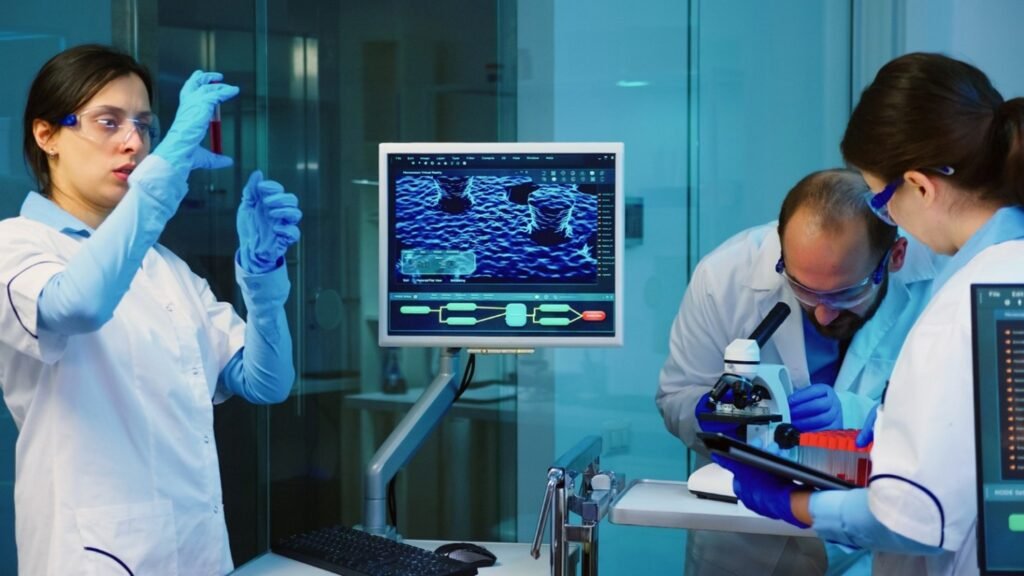
The challenges of precision medicine in diabetes span several critical areas:
- Complex Disease Biology: Diabetes, particularly type 2 is polygenic and heterogeneous, with several environmental factors and genes affecting the disease. This complicates the process of finding single genetic markers or pathways of interest to treat efficiently as monogenic or simpler diseases.
- Data Interpretation and Integration: The massive biological data need the intervention of experts to prevent false classification and false diagnosis. The combination of genetic, clinical, lifestyle, and environmental data into practical clinical outcomes is an extremely complicated task.
- Healthcare System Readiness: Healthcare systems should evolve, such as training of clinicians in genomics, data science and development of decision-support systems to take precision-based diagnostics and treatments into clinical practice.
- Regulatory and Payment Matters: Regulatory bodies and payers experience difficulties in establishing guidelines concerning evidence and approvals and paying policies on accurate diagnostics and treatments. This makes it difficult to make wider use outside research markets.
- Equity and Population Diversity: The research is largest in the populations of European ancestry, and therefore it is not generalizable. There should be inclusion of different ethnic and geographical populations to prevent the increased health inequalities.
- Cost-effectiveness and Evidence Base: More pragmatic trials and cost-benefit studies are required to show actual utility and economic worth of precision diabetes care especially outside the monogenic forms.
- Patient and Provider Engagement: Patients and clinicians should communicate effectively on risk and benefit, consider health literacy, and socioeconomic factors using shared decision-making tools.
You may also like to read: Role of Artificial Intelligence in Diabetes Management
Future Prospects
Precision medicine in diabetes has a transformative future on diabetes care because it can be used to approach diabetes diagnosis, treatment, and prevention in a highly personalized manner. Genetic testing, artificial intelligence, and analytics of big data are likely to enable clinicians to customize a treatment according to the personal genetic composition, metabolism, and lifestyle of the patient and achieve better treatment outcomes and fewer side effects. Subtype classification and individual predictive therapeutic responses Precision approaches are more practical as better diagnostic algorithms can classify diabetes subtypes more accurately and predict unique therapeutic responses.
Machine learning can be integrated with diabetes management, which will increase its effectiveness, real-time monitoring, and personalized care programs. Although precision medicine has already firmly established itself in the diagnosis of monogenic diabetes, its future development and use is to broaden it to the more common type 1 and type 2 diabetes. Further uptake will require overcoming issues like cost, integration of health care systems and equitable access. Finally, precision medicine is set to transform how diabetes is treated by no longer using standard guidelines but rather tailored therapy which helps to maximize health and quality of life in patients across the globe.
Bottom Line
Precision medicine presents enormous potential in transforming the treatment of diabetes to provide personalized treatment, early warning, and better patient outcomes. However, it is contingent on its ability to overcome price, availability, and information security. The potential of precision medicine can be realized by having healthcare systems encourage research, educating, and providing equitable access, which will be used to develop further, more effective, and personalized solutions to managing and preventing diabetes.