

Dr. Ahmad Shahzad
Founder | Lyallpur Diabetes Foundation
Consultant Diabetologist | Educator | Advocate for Preventive Care
One of the eye complications that are commonly associated with diabetes and a major cause of vision loss throughout the world is diabetic retinopathy. Unattended, it may silently develop and destroy the sensitive blood vessels in the retina causing blurred vision or even blindness. Luckily, there are some useful means to treat and cope with this disorder using modern medicine. We shall briefly examine the various treatment opportunities that exist with diabetic retinopathy in this article and how patients can hope to achieve once care is obtained in time.
What is Diabetic Retinopathy?
Diabetic retinopathy is the most frequent diabetic complication that impairs blood vessels of the retina, the light sensitive tissue at the back of the eye, which is the main cause of vision loss and blindness.
Treatment Options for Diabetic Retinopathy
Diabetic retinopathy treatment depends on stage and severity of the disease but includes management of blood sugar to highly complex surgical interventions. It is aimed to stop the development of the disease and avoiding further loss of vision because in many cases, previously damaged parts of the eye are irreversible.
Medical management
In the case of early-stage diabetic retinopathy, an ophthalmologist can only prescribe routine follow-up and rigid control of your general condition.
- Diabetes management: This is through strict regulation of your blood sugar level, which will prevent or at least delay the disease.
- Blood pressure and cholesterol: High blood pressure and high cholesterol can be treated and help to lessen the risk of the worsening of retinopathy.
- Fenofibrate: In individuals with non-proliferative diabetic retinopathy (NPDR), a cholesterol-lowering drug known as fenofibrate has been proven to decrease the chances of the condition progressing even those with normal lipid levels.
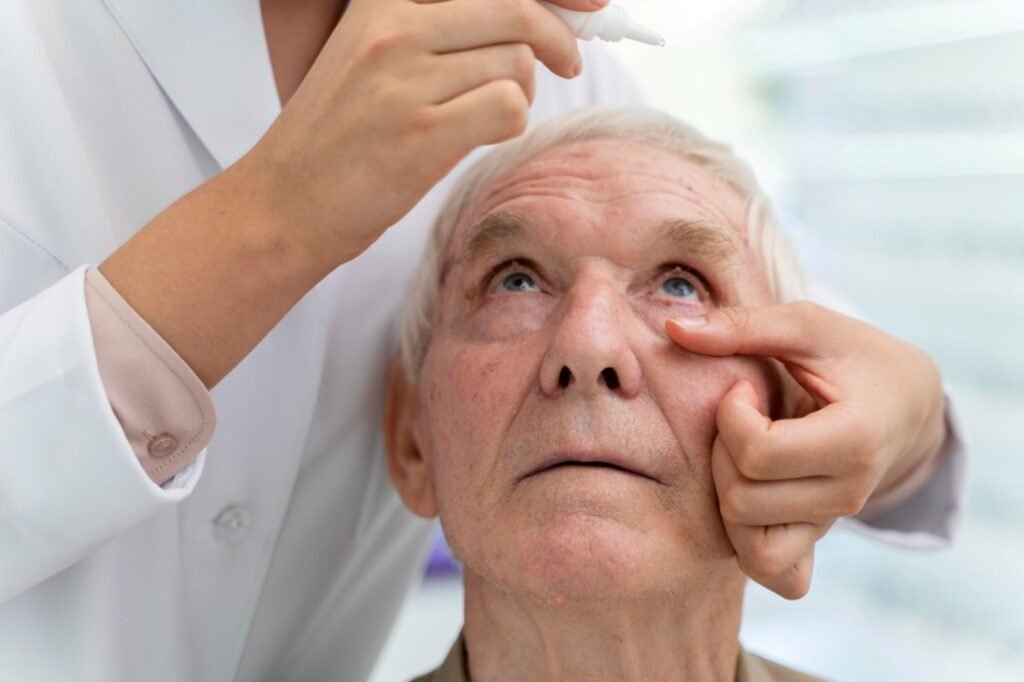
Eye injections
The swelling of the macula (central part of the retina) and growth of new, fragile blood vessels is treated with injections of medication directly into the eye to prevent the disease.
- Anti-VEGF drugs: These encompassed Avastin, Eylea, Lucentis, and Vabysmo, which are anti-vegetable endothelial growth factor (VEGF) drugs, which enlarges and permeabilizes blood vessels. One of their uses is as a first-line therapy of diabetic macular edema (DME) and proliferative diabetic retinopathy (PDR).
- Corticosteroid implants – In cases where there is no response to anti-VEGF therapy, steroid drug could be injected or implanted into the eye and the drug would be slowly released over a few months.
- Refillable eye implants: Newly approved models, including Susvimo, are provided with a refillable implant that pumps a specific level of a customized formulation of ranibizumab to the eye.
Laser treatments
Laser treatments can seal leaking blood vessels and shrink abnormal new ones.
- Focal or grid laser: This is done in the treatment of DME. It uses laser burns that are directed at ruptured blood vessels in the macula.
- Scatter (panretinal) photocoagulation: It is applied to cases of diabetic retinopathy which is advanced and proliferative. The laser produces small, scattered burns to the peripheral retina which shrink and disappear into the abnormal new blood vessels.
Eye surgery (Vitrectomy)
Surgery is typically reserved for advanced cases where other treatments are not sufficient.
- When is it needed? A vitrectomy can be used in case of severe bleeding in the vitreous gel which fails to clear, the presence of a lot of scar tissue pulling the retina, or a detached retina.
- What happens during surgery? The surgeon takes out the hazy vitreous gel and a scar tissue and puts in a clear saline solution or a gas or oil bubble to cushion the retina.
Emerging therapies
Ongoing research is exploring new and more effective treatments for diabetic retinopathy, including:
- New anti-angiogenic drugs
- Oral medications
- Stem-cell therapy
- Gene therapy
Although the damage cannot be reversed, treatment can help prevent or delay additional damage to the vision. Having an integrated approach and a high level of diabetes control is usually the best course of action.
You may also like to read: Preventing Vision Loss from Diabetic Retinopathy
Expected Outcomes by Treatment Type
Treatment of diabetic retinopathy aims at preventing or halting the disease progression and to avoid severe loss of vision. The level and form of your condition, the method of treatment, and your health, in general, blood sugar control, are among the factors that define the exact outcome you can expect. Although it can be improved, particularly when the disease is diagnosed in the early stages, in most cases, it is impossible to undo all the harm.
Expected outcomes by treatment type
- Often improve vision significantly in diabetic macular edema.
- Results are best with consistent and ongoing treatment.
- Reduces the risk of severe vision loss by more than 50%.
- May cause side effects like reduced night or peripheral vision.
- Effective for advanced cases like retinal detachment or hemorrhage.
- Can stabilize or improve vision, especially with early intervention.
Factors influencing long-term outcomes
The long-term prognosis is heavily influenced by several factors, many of which you can actively manage.
- Treatment adherence: It is important to adhere to your treatment program because under-treatment is one of the leading causes of a poor outcome in the real world.
- Management of diabetes: Glycemic control (HbA1C), blood pressure control and cholesterol control divert renal injury disease progression and enhance treatment results.
- The severity of the disease at diagnosis: the later the diabetic retinopathy is diagnosed and treated, the better the outcome is. Delaying action after the vision has been seriously affected may cause permanent structural harm.
- The basic retinal damage: The treatment can correct fluid and bleeding; however, the visual prognosis is constrained by the level of irreparable harm to the photoreceptors and retinal nerve cells that might have taken place.
Final Thoughts
Therapy of diabetic retinopathy is aimed at reducing the course of the disease, preserving the vision, and enhancing the quality of life. Although the results are not identical at each phase of the condition and different types of treatments are applied, early diagnosis and regular treatment can significantly help in saving vision. Medical therapy together with proper management of diabetes can help patients deliver positive long-term outcomes and minimize chances of losing their sight severely.
FAQs
Q: What is the 4 2 1 rule for diabetic retinopathy?
The diagnosis is based on the 4-2-1 rule. Diagnosis is made when the patient has, in 4 quadrants, diffuse intraretinal hemorrhages and microaneurysms, in 4 quadrants, venous beading, and in 1 quadrant, IRMA.
Q: Can mild diabetic retinopathy be reversed?
Treatment may delay or prevent the progression of diabetic retinopathy, but it is not a cure. Diabetes is a long-term health condition and as a result, future retinal injury and vision impairment can still occur. Regular eye exams will be required even after diabetic retinopathy is treated. There may be a time you require supplementary treatment.
Q: What is the new treatment for retinopathy?
Basel, 22 May 2025 – Roche (SIX: RO, ROG; OTCQX: RHHBY) has announced that Susvimo® (ranibizumab injection) 100 mg/mL is now approved by the US Food and Drug Administration (FDA) in the treatment of diabetic retinopathy (DR), a potentially blinding disorder, which is present in nearly 10 million individuals in the USA.